






05 Mar Planting 160,000 trees, 50% of which are threatened, in north-eastern Brazil (Phase 2)
Planting 160,000 trees, 50% of which are threatened, around Pedra Talhada Biological Reserve in north-eastern Brazil (Phase 2)
Partner: Association Nordesta Reforestation et Education
Years: 2025-2028, Phase 2
This project aims to restore the mixed primary forest on the left and right banks of the Rio Paraiba, Alagoas/Pernambuco, in north-eastern Brazil. The left bank includes the Pedra Talhada Biological Reserve massif and the right bank includes the sources of the Rio Paraíba.
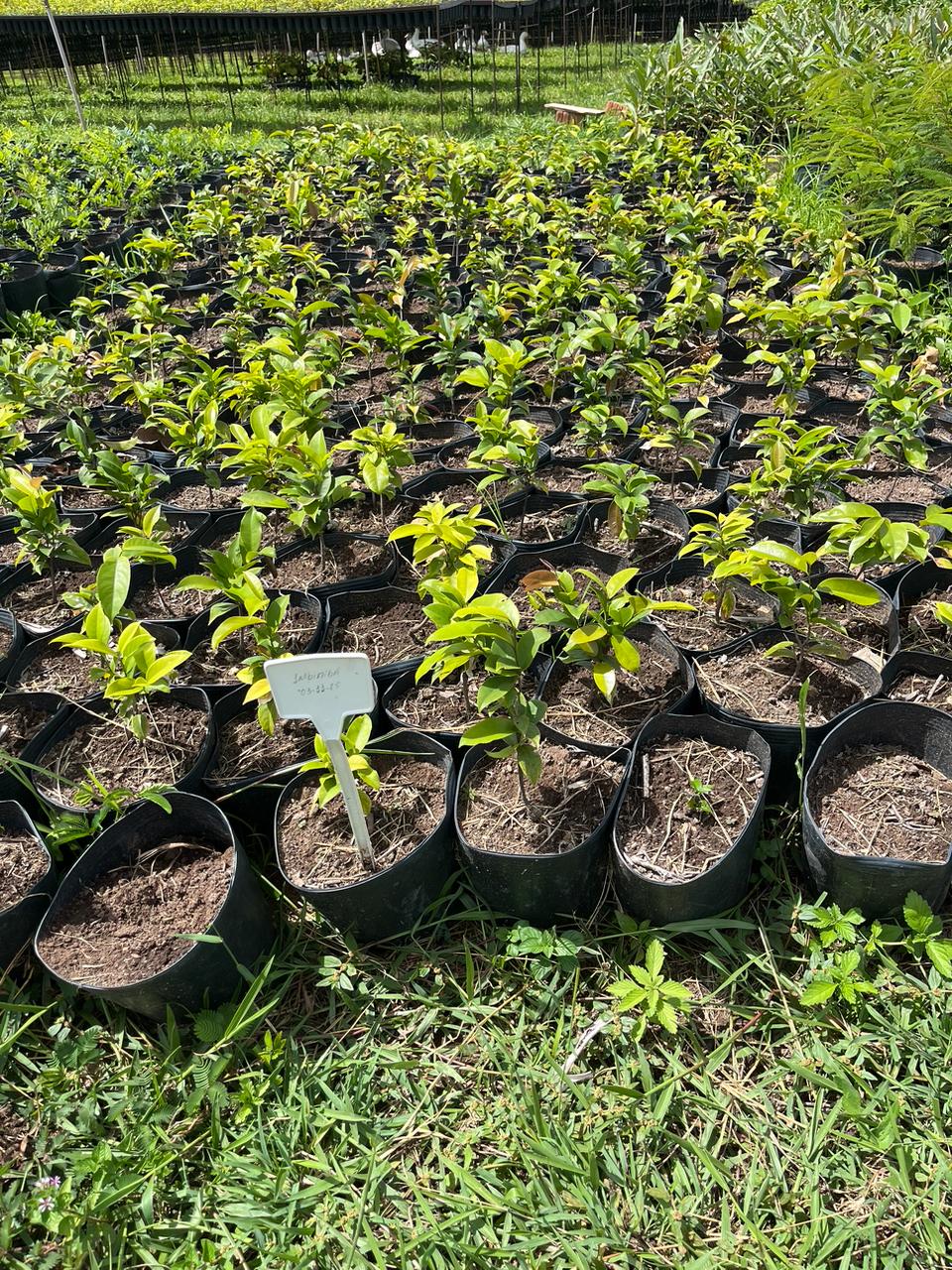
This project, based on the promising results of an initial phase plans to plant 160,000 native trees over three years, sourced from the Atlantic Forest, Cerrado and Caatinga biomes, including 80,000 trees of threatened species planted alongside 80,000 trees of non-threatened species. The threatened species mix includes: Campomanesia laurifolia (EN), Cedrela odorata (VU), Eschweilera alvimii (EN), Ficus laureola (VU), Handroanthus serratifolius (EN), Myrcia bergiana (VU), Ouratea pycnostachys (EN), Paubrasilia echinata (EN), Vochysia dardanoi (EN). The aim is to recreate a forest as close as possible to the one that existed before massive deforestation caused by cattle farming, while promoting certain species that have been hit harder by deforestation.
Planting is concentrated around the sources and tributaries of the left and right banks of the Rio Paraiba, in order to limit recurring floods and droughts. A vast awareness campaign that involves schools and local communities highlights the importance of conserving endangered species and should ensure full support for the project locally.