





06 Mar Guardians of the Trees in the Paso de las Nubes Biological Corridor, Costa Rica
Guardians of the Trees: Conservation of Threatened Tree Species and Ecological Restoration in the Paso de las Nubes Biological Corridor, Costa Rica
Partner: Pronatura Agathos Costa Rica Association (Agathos)
Years: 2025-2028
The Paso de las Nubes Biological Corridor (CBPN), located in north-central Costa Rica, faces increasing pressures due to forest loss, landscape fragmentation, and habitat degradation. These changes threaten ecological connectivity and key ecosystem services such as water regulation, soil conservation, and carbon sequestration.
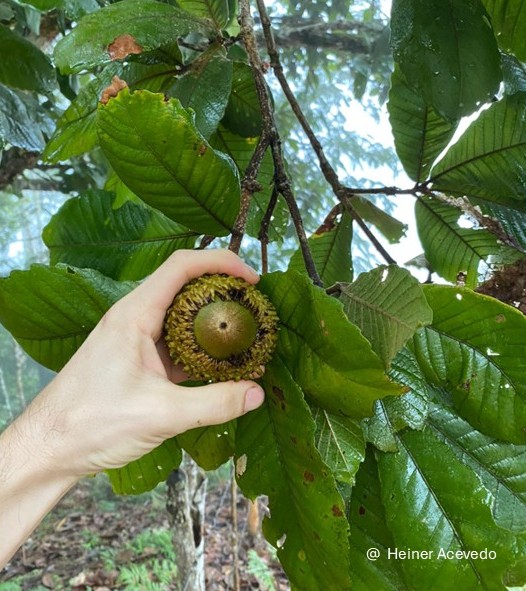
Quercus insignis
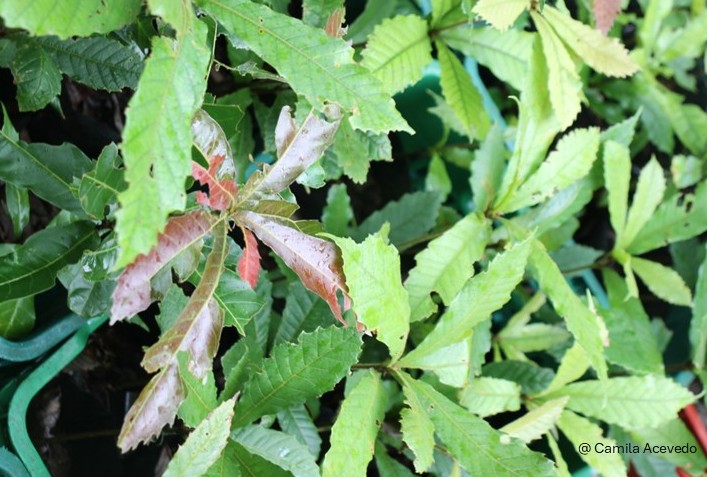
Agathos, together with local and technical partners, implements a 36-month project to improve the ecological resilience and connectivity of the CBPN, with a strong emphasis on the conservation and restoration of threatened native tree species. A preliminary list of 22 native tree species, classified as Critically Endangered (CR), Endangered (EN) and Vulnerable (VU) by the IUCN Red List, has been identified as this project’s conservation targets: Arachnothryx chaconii (EN), Beilschmiedia tilaranensis (EN), Clethra talamancana (EN), Cupania grandiflora (EN), Cupania moralesii (EN), Dalbergia ruddiae (EN), Eugenia belloi (EN), Guarea inesiana (CR), Haydenoxylon haberianum (EN), Inga stenophylla (EN), Licaria brenesii (EN), Lonchocarpus monteviridis (VU), Meliosma subcordata (EN), Mespilodaphne morae (EN), Myrcia monteverdensis (EN), Persea brenesii (VU), Pleurothyrium guindonii (EN), Pleurothyrium palmanum (VU), Plinia nicaraguensis (EN), Quercus insignis (EN), Sciodaphyllum institum (EN), Weinmannia vulcanicola (EN).
The project strategy includes (i) Identifying and prioritizing five critical restoration sites using geospatial tools and participatory approaches; (ii) Strengthening local capacities through technical training modules, phenological monitoring, and community nurseries; and (iii) Implementing restoration activities on approximately 72 hectares, including water protection areas (springs and riparian zones), with ecological monitoring systems in place to assess effectiveness.
This initiative contributes to biodiversity recovery, enhanced habitat connectivity, and climate change mitigation, while empowering local actors to maintain long-term conservation efforts across the corridor landscape.