






03 Mar Enhanced conservation of 57 highly threatened Tanzanian tree species
Enhanced conservation of 57 highly threatened Tanzanian tree species
Partner: Missouri Botanical Garden (MBG)
Years: 2025-2028
Tanzania harbours 1,800 native tree species, 378 of which are threatened. In collaboration with the Tanzania Forest Service (TFS) and Tanzania Forestry Research Institute (TAFORI), Missouri Botanical Garden (MBG) delivers a conservation programme focusing on 57 CR and EN tree species in two potential Key Biodiversity Areas (KBA) areas of the Eastern Arc Mountains.
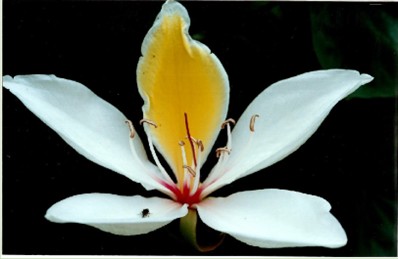
Gigasiphon macrosiphon
Using techniques developed by MBG and based on its taxonomic expertise, the project team surveys areas with known concentrations of target species to collect, bank, propagate seeds, and determine which local populations are amenable to in situ conservation or in need of reinforcement planting.
MBG grows 12,000 – 75,000 seedlings in two nurseries, establishing two gene banks. Approximately 55% of these seedlings will be planted in two 40-hectare plots to enrich wild populations, and restore at least 5 hectares in each area. The project is also leveraged by sharing seedlings and technical knowledge with selected in-country partners.
The project’s overall objectives are to reinforce the capacity of the Tanzania Forest Service to produce seedlings of threatened tree species across its network of 31 nurseries, and establish a new strategy for their in situ conservation, population reinforcement, and restoration in and around protected areas. These outcomes can be scaled in future phases to address the remaining 321 threatened Tanzanian tree species.
The list of target species for this ambitious initiative includes: Afrocarpus usambarensis (EN), Anisophyllea obtusifolia (EN), Baphia pauloi (EN), Baphia semseiana (EN), Bussea eggelingii (EN), Coffea kihansiensis (CR), Coffea kimbozensis (CR), Coffea mongensis (EN), Cola kimbozensis (CR), Cola quentinii (CR), Cola stelechantha (EN), Cordia peteri (EN), Cyathea fadenii (EN), Cyathea schliebeni (EN), Diospyros uzungwaensis (CR), Drypetes gerrardinoides (EN), Drypetes pleioneura (EN), Encephalartos kanga (CR), Fernandoa abbreviata (EN), Garcinia bifasciculata (CR), Garcinia semseii (EN), Gigasiphon macrosiphon (EN), Gymnosporia nguruensis (EN), Huberantha verdcourtii (EN), Isolona linearis (EN), Keetia koritschoneri (EN), Lasianthus cereiflorus (EN), Lasianthus glomeruliflorus (EN), Lasianthus wallacei (EN), Lijndenia brenanii (EN), Lingelsheimia sylvestris (CR), Mansonia diatomanthera (EN), Multidentia sclerocarpa (EN), Neocussonia lukwangulensis (EN), Omphalocarpum strombocarpum (EN), Pauridiantha chlorantha (EN), Pauridiantha udzungwaensis (EN), Pavetta sparsipila (EN), Pleioceras orientale (EN), Polyceratocarpus askhambryan-iringae (EN), Polyscias stuhlmannii (EN), Psydrax lynesii (EN), Pycnocoma macrantha (EN), Sclerochiton obtusisepalus (EN), Sclerochiton uluguruensis (EN), Solanum schliebeniii (EN), Syzygium parvulum (EN), Tetrorchidium ulugurense (CR), Turraea kimbozensis (EN), Uvariodendron gorgonis (EN), Uvariodendron usambarense (EN), Uvariopsis bisexualis (EN), Uvariopsis lovettiana (EN), Vernonia bruceae (EN), Warneckea hedbergiorum (EN), Warneckea schliebenii (EN), Zenkerella perplexa (CR).
