





05 Mar Communal conservation of threatened Polylepis forests in Puno, Peru
Communal conservation of threatened Polylepis forests in Puno, Peru
Partner: Wildlife Conservation Society (WCS)
Years: 2025-2028
The project aims to be a catalyst for broader and successful Polylepis conservation in the Peruvian Andes. With Fondation Franklinia’s support, Wildlife Conservation Society (WCS) seeks to generate high-quality information on Polylepis distribution in the Andean region and develop community-led reforestation and conservation efforts, contributing to the conservation of Peru’s native tree species.
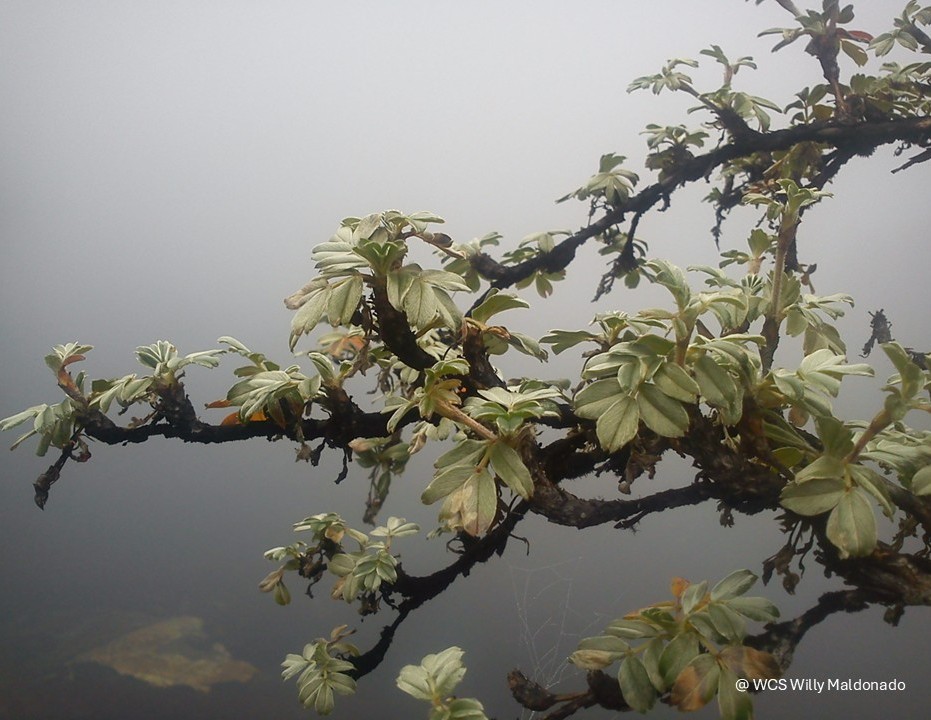
Polylepis pepei
During this three-year project, WCS develops a methodology for mapping Polylepis forests and applies it to map the relic forests of Sandia, Puno. The results are shared through a scientific paper and a user-friendly StoryMap.
Recognizing the key role of local communities in long-term conservation, WCS works with three Quechua communities in Sandia to reforest 15 hectares (15,000 trees) and promote the conservation of 100 hectares of Polylepis forests by reducing and controlling forest fires and avoiding threatening activities such as increasing illegal mining. WCS trains community members in forest mapping, nursery management, seed collection, planting techniques, reforestation monitoring, and fire prevention. Three species of Polylepis are targeted: Polylepis incarum (EN), Polylepis pallidistigma (EN), Polylepis pepei (EN).
Throughout the project, WCS will raise awareness on the critical state of Polylepis forests and their ecosystem services, establishing a solid foundation for sustained engagement and conservation beyond the project life span.
