




20 Mar Integrated Conservation of Threatened Tree Species in Mesoamerica – Phase II
Integrated Conservation of Threatened Tree Species in Mesoamerica – Phase II
Partner: The Morton Arboretum
Years: 2026-2028
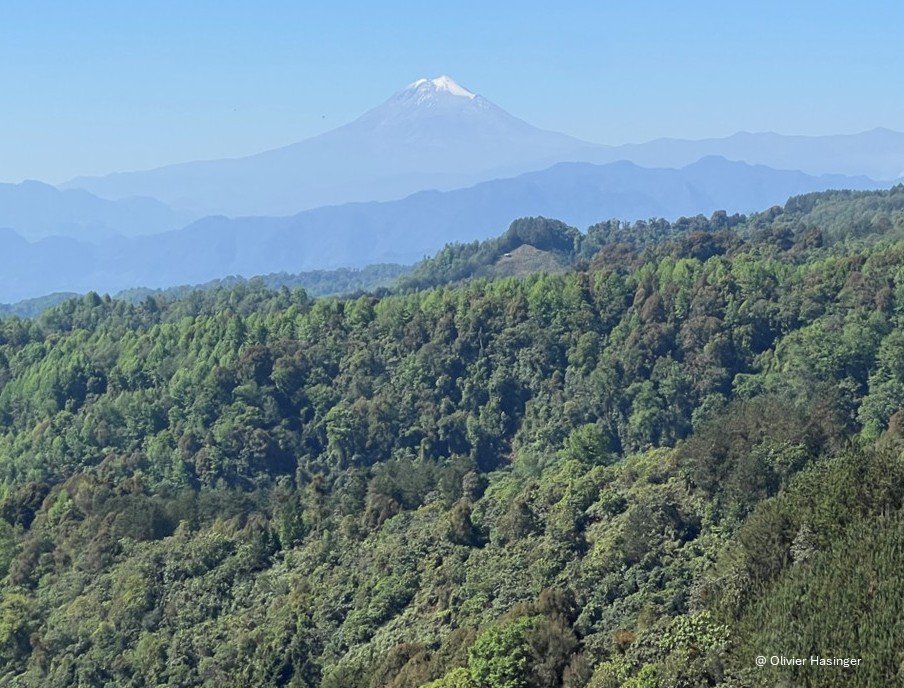
This project builds on ten years of efforts by Morton Arboretum’s staff, in collaboration with local partners, to safeguard tropical montane cloud forest, tropical dry forest, tropical scrub, premontane forest and other important ecosystems for imperilled tree species in Mesoamerica. Morton Arboretum manages a three-year project to protect and recover threatened tree species in Mesoamerica through science-based, integrated conservation actions conducted with local partners, fostering community engagement.
With this project, the Morton Arboretum is developing two national-level conservation action plans for more than 300 threatened trees in Costa Rica and Guatemala, informed by conservation gap analyses for priority species in each country.
To advance direct action on species in situ, the Morton Arboretum works with partners in 15 locations across five sites in four countries (Mexico, Guatemala, El Salvador and Costa Rica) to advance ongoing action plans and begin new conservation initiatives, strengthening the Arboretum’s current network of conservation actors in the region, while improving degraded habitats with community involvement.
Recovery efforts include planting 18,000 seedlings from 64 species (including 35 threatened, 11 near-threatened and 4 data deficient species). The Arboretum enables conditions for tree conservation in the region by improving organizational capacity among partners, providing training opportunities, improving monitoring tools, and raising awareness of the importance of conserving tree species and their habitats.
The Arboretum’s networks are leveraged to advocate for tree conservation, promoting science-based, equitable projects that also support local communities.
The project has a regional scope throughout Mesoamerica, but most activities are to be conducted in five main sites, spanning four countries. The five sites (and associated target species) are:
• Puebla state in Mexico: Quercus hirtifolia (EN), Quercus delgadoana (EN), Quercus acutifolia (VU), Acer negundo subsp. Mexicanum (VU).
• Veracruz state in Mexico: Quercus delgadoana (EN), Quercus meavei (VU), Quercus insignis (EN), Acer skutchii (CR), Persea cinerascens (EN), Persea longipes (EN), Persea schiedeana (EN).
• The Cerros de Escazú Protected Area (ZPCE) in Costa Rica: Quercus insignis (EN), Persea schiedeana (EN), Ocotea pharomachrosorum (EN), Parathesis acostensis (VU), Amphitecna gentry (VU), Cordia megalantha (VU), Dalbergia calycina (VU).
• Baja California Sur in Mexico: Quercus brandegeei (EN), Quercus devia (EN), Guaiacum unijugum (CR), Esenbeckia flava (VU), Fouquieria diguetii (VU), Jatropha vernicosa (VU).
• The Trifinio Biosphere Reserve in Guatemala and El Salvador: Quercus gulielmi-treleasei (VU), Quercus insignis (EN), Ocotea macrantha (CR), Guarea luxii (VU), Saurauia villosa (VU), Podocarpus matudae (VU).