




28 Nov Recovery strategies for ten of Colombia’s most threatened tree species in Antioquia
Species-specific recovery strategies for ten of Colombia’s most threatened tree species in the Andes of Antioquia
Partner: Medellín Botanical Garden
Years: 2025-2028
The project is situated in the southwest and west of Antioquia in Colombia and focuses on safeguarding threatened tree species in designated conservation areas and targeted restoration sites. These areas were selected based on their high density of threatened trees, with a particular focus on the Montane Forest of South Antioquia.
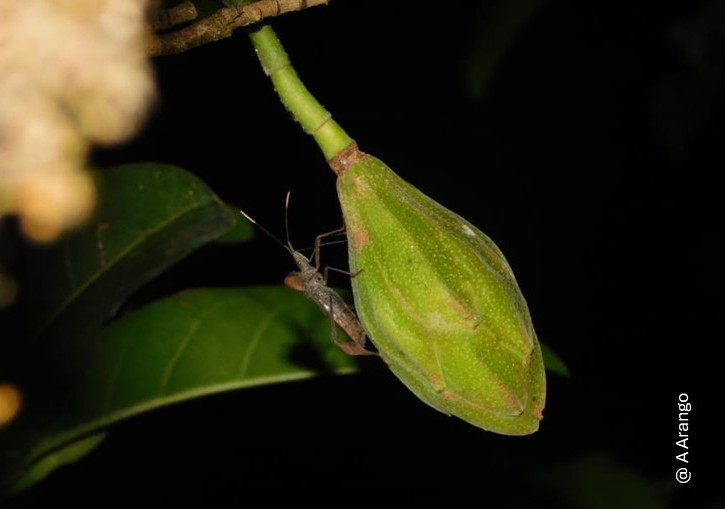
Magnolia jardinensis fruit(EN)
Established in 1972, the Botanical Garden of Medellin (BGM) is a non-profit organization supported by Colombia’s Ministry of Science, dedicated to advancing scientific knowledge of Colombia’s biodiversity.
BGM prioritized ten species categorized as Endangered to Critically Endangered, underscoring the urgency of protective measures against threats such as habitat loss and fragmentation: Chionanthus abriaquiensis (CR), Magnolia chocoensis (EN), Magnolia espinalii (CR), Magnolia frontinoensis (EN), Magnolia gilbertoi (EN), Magnolia henaoi (EN), Magnolia jardinensis (CR), Magnolia lenticellata (EN), Magnolia urraoensis (EN) and Moquilea cabrerae (VU).
Colombia’s action plan for the conservation of threatened trees prioritized nine of these species. The project’s long-term vision is to ensure the viability of these species, maintaining at least one viable population in a protected area. It delivers impact on seven key indicators for Franklinia encompassing species, habitat, threat reduction, and enabling conditions levels. Through propagation, reintroduction, and stakeholder empowerment programs, BGM seeks to establish protected populations of each prioritized species, effectively reducing threats and ensuring their conservation, by collaborating with allies who have made significant strides in conservation efforts, including Salvamontes, NaturCaicedo, and TechodeAgua.